You’ve got a property that needs work, and you’re not sure whether to sink money into repairs or just sell it and move on. The question keeps a lot of Alabama homeowners up at night, and the answer isn’t as obvious as most people think. I’ve bought houses across North Alabama, from Decatur to Huntsville to the Tennessee Valley, and the path that makes the most financial sense depends entirely on your specific situation, not on some one-size-fits-all advice you’ll find online.
What Does ‘As-Is’ Mean When Selling a House in Alabama?
Getting this part wrong costs sellers real money. A lot of folks think listing “as-is” means they can hide problems, stay quiet about the leaky crawl space under the back bedroom, and just hand over the keys. Alabama law does not work that way, and misunderstanding it puts you at legal risk after closing (sometimes years after closing).
Selling as-is in Alabama means you’re offering the property in its current physical condition and won’t be making repairs or issuing repair credits. The buyer can still run a home inspection, and if they find problems, your only obligation is to refuse their repair demands, not to fix anything. What you cannot do is lie about known defects. Alabama follows a caveat emptor framework, meaning buyers are expected to do their due diligence, but sellers are still required to disclose known material defects that a buyer asks about or that pose genuine safety hazards.
This matters specifically for fixer-uppers. Mold behind the walls, a foundation crack you’ve watched for years, knob-and-tube wiring you’ve known about since you bought the place: these need to come out in your disclosures. Trying to hide them isn’t a legal gray area. An attorney in Alabama can walk you through exactly what your disclosure form needs to cover, and for a house with real issues, that consultation is usually worth the cost.
One thing I see sellers get wrong constantly: they assume “as-is” means there’s no negotiation. Buyers can still come back after a property inspection with a lower price request, and you’re free to say no, counter, or walk away. The contract language controls the process. Make sure yours is drafted clearly.
Which Types of Homes Are Typically Sold As-Is?
Houses that sell as-is aren’t disasters most of the time. They’re just complicated.
Inherited properties top the list. When someone passes in Tuscumbia or Selma, and the heirs live out of state, nobody wants to coordinate a renovation from a thousand miles away. Probate sales, divorce sales, and landlord-owned rentals that have been through a few too many tenants all tend to go the as-is route for the same reason: the owner doesn’t want to manage a renovation project, and the carrying costs of holding a property through repairs add up fast.
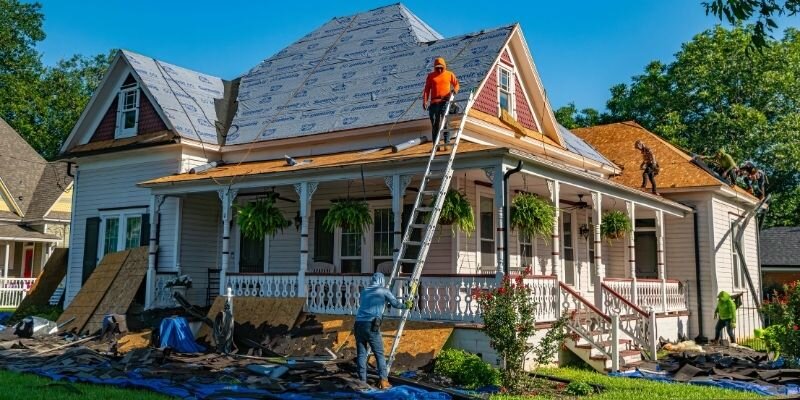
A couple of weeks ago, I worked with the Martinez family over in Madison. They’d inherited a rental house from a parent and had been collecting below-market rent from a long-term tenant for years. By the time they called me, the roof was showing its age, and the HVAC was original equipment from the early 90s. The garage was packed with old lawn equipment and furniture the tenant had stopped using (classic long-term rental accumulation). They’d never wanted to be landlords and just wanted out cleanly. We closed on a Thursday, and they split the proceeds with no contractor meetings, no cleanup drama, no open houses.
Beyond inherited properties, houses with major structural problems, extensive water damage, code violations, or mold find their natural buyer pool among cash investors and real estate investors rather than financed buyers. A buyer using an FHA loan can’t purchase a house that doesn’t meet minimum property standards, so certain defects essentially eliminate a whole category of buyers before you even list.
Get the fair cash offer you deserve and sell your home for cash in Alabama with confidence.
What Problems Do You Have to Disclose in Alabama?

Continuing from the legal side of as-is sales: your disclosure obligations don’t disappear because you put “sold as-is” in the contract.
Alabama’s Seller Property Disclosure form covers a specific list of known conditions. You’re required to answer honestly about things like water intrusion, roof condition, pest damage, structural problems, mold, plumbing, and electrical issues, but only to the extent of your actual knowledge. You don’t have to hire a structural engineer to find problems you don’t already know about. You do have to be truthful about what you know.
A few specific areas that catch Alabama sellers off guard. Properties near creeks in places like Prattville or the flood-prone lowlands around the Tombigbee River sometimes carry flood zone disclosures that buyers have a right to know about. Mold is a disclosure trigger even in as-is sales. If you’ve had a leak and you know mold grew behind the drywall, that has to be on the table (and yes, buyers do ask).
An attorney is not legally required for sellers to close in Alabama, though title companies and attorneys commonly handle the closings. For a property with known defects, an attorney review of your disclosure form before you sign a contract is worth every penny. The last thing you want is a buyer coming back after closing, claiming you withheld material information, and that’s a dispute that can drag on for years.
Pros and Cons of Selling Your House As-Is in Alabama
For a long time, I thought the biggest advantage of selling as-is was speed. Speed matters, but it’s not always the main benefit.
The real advantage, the one people underestimate, is certainty. When you list a fixer-upper through a traditional expert, you’re rolling the dice on whether a buyer’s financing will hold together after the inspection. Lenders may require certain repairs for financing, even in as-is sales. A buyer could fall in love with your place, sign a contract, and then get denied by their lender because the roof has too much deterioration for the loan to fund. With a cash buyer, that scenario doesn’t exist.
On the con side, price is the real trade-off. For distressed or inherited Alabama properties, the discount can reach 20% to 40% below fair market value, depending on condition and buyer type. Reality doesn’t always match that assumption with a lightly worn house, but on a property needing significant work (roof, foundation, systems), you should go in with realistic expectations.
Listing with an expert as is gives you MLS exposure and a larger pool of buyers, but you still have to survive the inspection period, appraisal, and mortgage financing process. Your home sits on the market for weeks while buyers kick tires. Houses in Alabama spent an average of 69 days on the market in 2025. For a fixer-upper with deferred maintenance, that’s a long time to carry a mortgage, utilities, and insurance on a house you’re trying to leave.
The as-is route isn’t the right move for every seller. But for the right situation, it stops the bleeding.
How Much Money Will You Make From an As-Is Home Sale in Alabama?
Sellers picture a clean number: list price minus what they owe, and that’s the check they’ll get. The costs between those two points eat more than most people budget for.
Alabama’s median sales price in 2025 hit $233,969, the highest on record in the state’s history and an 11% jump year over year. So the market is genuinely moving in your favor if your property has any equity. But seller costs come out of whatever price you negotiate.
A traditional agent-assisted sale carries commission costs. Agent fees in Alabama typically run around 5% to 6% of the sale price combined for both sides, and while post-NAR settlement rules changed how buyer-agent compensation is advertised, many Alabama sellers still cover both agents to attract more offers. Add another roughly 3% in closing costs on top of commissions (title, taxes, attorney fees). This total is real money on a $230,000 sale.
Selling to a cash buyer eliminates the commission line and typically trims closing costs. The trade-off is that the buyer’s offer reflects the cost of repairs they’re taking on. A house needing a new roof, HVAC work, and updated plumbing will get a lower offer than a property that just needs paint and carpet. It’s arithmetic, not a lowball tactic.
Do the math both ways before you decide. Take your likely as-is cash offer, and compare it to a projected retail sale price minus commissions, closing costs, repair expenses, and carrying costs for two to three months on the market. Sometimes the gap between those two numbers is surprisingly small, making a cash sale virtually free. Sometimes it’s not.
We buy homes in Huntsville and nearby areas, helping homeowners sell fast without the stress of traditional listings.
How to Sell Your House As-Is to a Cash Buyer in Alabama
Cash buyer offers expire. This part doesn’t always make it into the glossy “sell your house fast” content.
Most reputable cash buyers will give you a written offer with a 24 to 72-hour acceptance window, sometimes longer. Once you accept, they usually request a 7- to 14-day inspection period, even though they’re buying as-is. They’re not inspecting to demand repairs; they’re confirming the property matches what they were told so they can finalize their renovation budget (scope of work drives everything). Closing can happen in as few as two to three weeks from acceptance, compared to the standard 30 to 45 days a financed real estate transaction takes.
An estimated 36.7% of Alabama homes were sold for cash in 2024, reflecting strong investor demand for the state’s affordable market. This is not a niche corner of the Alabama market. It’s more than a third of all sales. What that means for you is there’s genuine competition among cash buyers for good properties, and you don’t have to take the first offer you get.
Get at least two or three offers before you sign anything. A local buyer who knows Madison County or Morgan County comparable sales will generally price more accurately than a national wholesale operation running a formula from an out-of-state office. Ask for proof of funds before you go under contract, because any serious buyer will provide a bank statement or other documentation showing they have the cash to close.
North Alabama House Buyer works exactly this way: they’re a local operation, they know the North Alabama market from Huntsville down through Decatur, and they make real offers based on actual property condition rather than a generic algorithm.
We Buy Houses Companies in Alabama: What Are Your Options?

There were 6,039 foreclosures in Alabama in 2025, a 9.3% increase compared to the year before. The increase has pulled more investors into the state, driving more companies to compete for distressed and as-is properties. Sellers in that position have real leverage right now.
Your options break into roughly three categories. National “We Buy Houses” franchise operations like HomeVestors have brand recognition and a standardized process, but their offers tend to follow a formula that doesn’t always account for local market nuance. They’re buying in Phoenix City and Pelham by the same model they use in Peoria. iBuyers like Opendoor prefer cleaner properties and charge service fees that eat into the price advantage you’d expect from bypassing an expert.
Local investors are often your best bet on genuinely distressed properties. A local real estate investor who’s been buying in the Tennessee Valley for years understands what comparable sales look like in your specific neighborhood, knows the local contractor market, and can close on a schedule that works for you. They don’t have corporate overhead driving their pricing decisions.
Verify BBB standing and ask for references. The Better Business Bureau is a reasonable starting point for vetting any company you haven’t worked with before, and any established local buyer should be able to point you to past sellers who closed with them.
North Alabama House Buyer falls in this local category. They buy properties across the region, from the Rocket City suburbs in Madison and Limestone Counties all the way down toward Cullman, and they’re not running a script from a call center. That local knowledge shows up in the offer and in how the transaction actually goes (closing timelines included).
Is Selling Your House As-Is in Alabama the Right Move for You?
What’s the property actually costing you to hold?
That question cuts through most of the noise. Mortgage payments, property taxes (Alabama’s rate runs around 0.40%, one of the lowest in the country, but it adds up), insurance, utilities if the house is vacant, lawn care on a property you’re not living in: these aren’t hypothetical costs. They’re real money leaving your account every month while you deliberate.
Rachel Caldwell called me about an inherited house over in Cullman. Her mother had lived there for thirty years, and the place showed it: two sheds full of tools and garden equipment, a sunroom addition that had never been properly permitted, and three siblings who all had opinions but none of whom wanted to manage a renovation. We walked through together, and the garage alone had enough stored items to fill a moving truck. Rachel’s family didn’t need top dollar; they needed the estate settled without a six-month contractor project hanging over them. We closed out clean, each sibling got their share, and nobody had to fly back to Alabama twice.
That kind of situation is exactly where selling as-is to a local buyer earns its place. But if your house just needs paint, carpet, and a new water heater, the open market with a good expert might net you more. Get a cash offer and a CMA from a local expert and compare the actual numbers.
The right answer is the one that fits your timeline, your financial position, and your stress tolerance. Not the one someone else thinks you should take.
Frequently Asked Questions
How Do You Sell a Fixer-upper House Fast?
Price it honestly from day one and make it easy for investors to say yes. That means clean disclosures, access for showings or walkthroughs, and either a pre-listing inspection or a price that already reflects the condition. Selling directly to a local cash buyer is the fastest path available, with closings often happening within two to three weeks of an accepted offer, no lender delays, no appraisal, no repair negotiations mid-contract.
How Much Does It Cost to Sell a $300,000 Home in Alabama?
On a $300,000 sale through a traditional expert, plan to give up somewhere between 8% and 10% of the sale price when you add expert commissions, closing costs, and any buyer concessions. That’s roughly $24,000 to $30,000 off the top before you see a check. Selling to a cash buyer eliminates the commission line and typically cuts closing costs, though the purchase price will likely be lower than a full retail sale.
Do I Have to Pay Taxes When I Sell My House in Alabama?
State-level capital gains taxes in Alabama apply if you made a profit on the sale, though the federal exclusion (up to $250,000 for single filers, $500,000 for married couples filing jointly) covers most primary residences that were owner-occupied for at least two of the last five years. Alabama does not charge a transfer tax to the seller; that cost typically falls to the buyer here. Talk to a tax professional about your specific situation before closing, especially if it’s an inherited or investment property.
What Is the Hardest Month to Sell a House?
January is consistently the slowest month for home sales across Alabama. Buyer activity drops off after the holidays, mortgage lenders are processing year-end paperwork, and families don’t want to move during the school year. If you’re listing on the open market, late February through June tends to draw the most buyer traffic. That said, cash buyers are active year-round, so if your situation calls for a fast sale, the calendar matters a lot less.
If you want to talk through what your property might be worth and what your real options look like, we’re here. No pressure, no obligation, just a straight conversation with someone who knows the North Alabama market and will give you an honest answer. Reach out to North Alabama House Buyer anytime.
Helpful Alabama Blog Articles
- Selling a Home with Code Violations in Alabama
- How to Sell Your House Without a Realtor in Alabama
- Do I Need a Lawyer to Sell My House in Alabama
- How Much Does Home Staging Cost in Alabama
- FSBO Costs in Alabama You Need to Know
- Selling a House with Foundation Problems in Alabama
- Can Medical Bills Take Your House in Alabama?
- How To Sell A House with Termites in Alabama
- Can A Buyer Back Out After Inspection in Alabama
- FHA Required Repairs
- What Do I Have to Disclose When Selling a House
- Can You Sell A House with A Mortgage in Alabama
- Tax Implications of Selling A Home in Alabama
- Squatter’s Rights in Alabama
- How to Sell a Fixer Upper House in Alabama
- Selling Investment Property in Alabama